

Hear me out
Episode #16: leadership, legacy, and Law & Order

It’s been a quiet weekend at the farm, which is exactly what my soul needed after six weeks of nonstop travel. That said, I’ve still been tracking the Bezos-Sánchez wedding from afar.
What I’m finding most interesting? The uproar over Lauren Sánchez Bezos’s Vogue cover, some claiming it’s proof that covers can now be bought.
All of this just as Anna Wintour announced she’s stepping down as Vogue’s Editor in Chief. She’s not going far, though. She’ll stay on as Head of Editorial Content, retaining creative control. TG because it’s hard to imagine Vogue without her.
With that, here’s what I listened to this week:
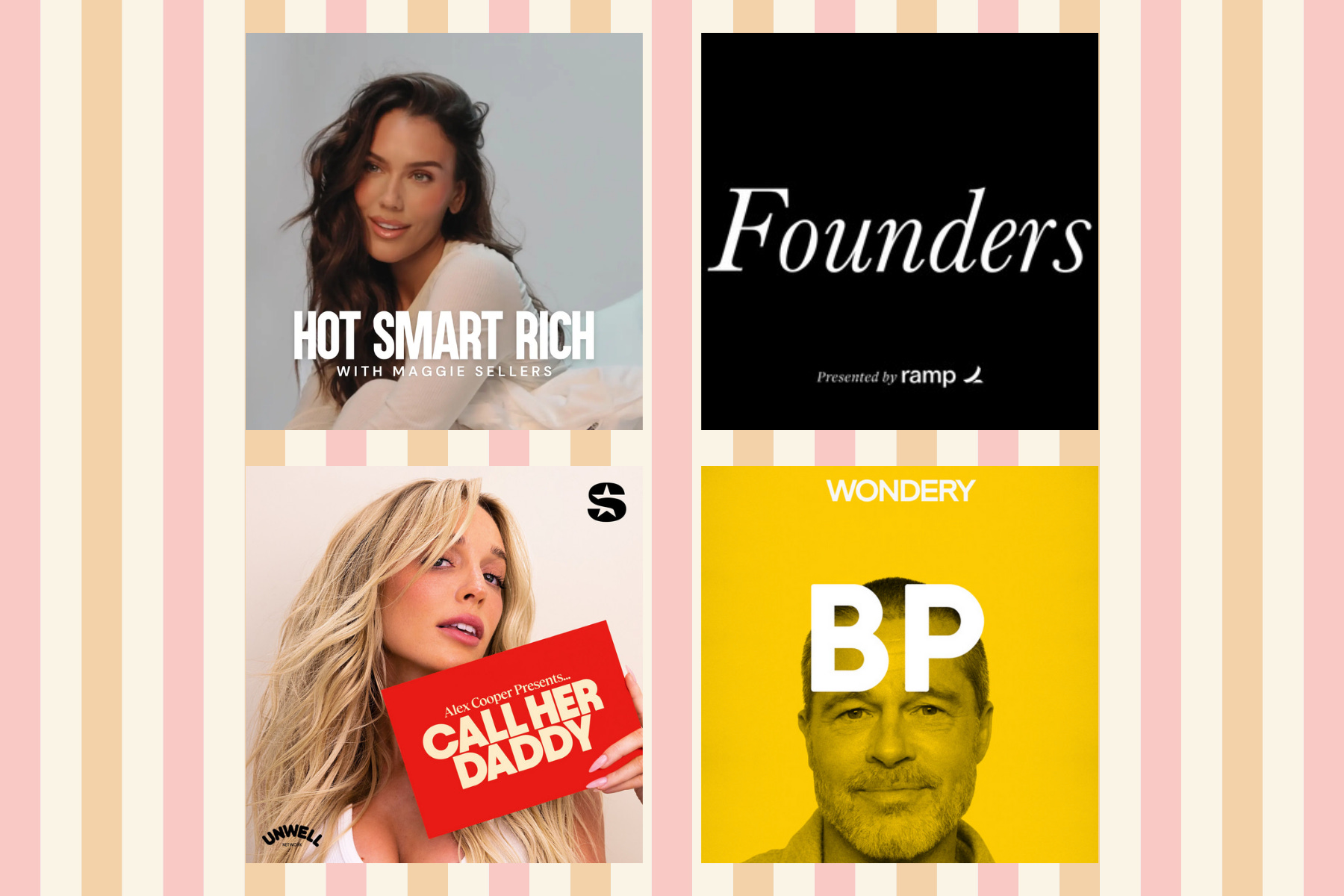
1) Hot Smart Rich: Former WeightWatchers CEO, Sima Sistani
This week’s guest is Sima Sistani: former WeightWatchers CEO, builder of Houseparty (remember that app we all used for ten minutes in 2020?), and now, a self-described “recovering CEO” teaching yoga and writing her own Substack called Default Settings.
Sima’s story is deeply rooted in the American Dream. Her parents gave everything so she could have everything. And she’s been paying it forward ever since.
She’s one of those people who naturally builds followership. Conviction-driven, no tolerance for doing things she doesn’t believe in, and deeply respectful of craft. She mentioned Jiro Dreams of Sushi (a must-watch!) as a reference point for how she leads: do the thing well, beautifully, and with pride.
When she took the reins at WeightWatchers, it was a billion-dollar business, but to her, it felt like a startup. A total turnaround. She dove in headfirst, joining Slack channels, sitting in on medical meetings, following her curiosity. That’s how she learned about GLP-1s and realized something fundamental: WW had been telling people their weight was a willpower issue when, for so many, it’s a disease. She couldn’t “walk in those shoes another day” without doing something about it.
So she did the work. Gathered the data. Built the case. And made what she called a “bet-the-company” decision to steer WW into the prescription weight loss space. She asked herself not just what if it fails? but what if I don’t do it?
She also shared that she personally lost 60 pounds on WeightWatchers, especially postpartum when it felt impossible. But eventually, she made the decision to step down. She talked openly about how hard it was to leave because so much of her identity was wrapped up in that role. Stepping away wasn’t easy, but it was necessary.
Now, she’s enjoying her freedom. She’s living a “portfolio life”: teaching yoga, serving on boards, and preparing to teach a course at Duke this fall. She’s shedding the title, the urgency, the grind, and stepping into alignment over ambition. Energy over outcome.
2) Founders: Michele Ferrero and His $40 Billion Privately Owned Chocolate Empire
Michele Ferrero, the richest man in Italy and the inventor of Nutella, quietly built a $40 billion global chocolate empire while granting only one interview in his entire life. And it was only allowed to be published after his death.
This episode is a fascinating deep dive into one of the most paradoxically private and wildly influential founders in modern business. Ferrero wasn’t just an innovator. He was an operator, a builder, a devout Catholic, and a man whose factory workers saw him more as a father figure than a boss.
Ferrero’s story starts in the post-World War II Italian countryside. Chocolate was still rationed, but hazelnuts were cheap. His father, a pastry maker, invented a spread that could offer affordable indulgence to the working class at about 1/5 the price of chocolate. When Michele’s father died suddenly, he took over the business at age 24 and immediately wrote a letter to employees promising to devote his life to the company. He meant it. He worked 7 days a week, often overnight, and saw the business not just as a livelihood but a moral obligation: if the company failed, thousands of families would suffer.
What followed was decades of quiet innovation. While Ferrero’s best-known product is Nutella (with $3B in annual sales), he also invented Kinder chocolates, Tic Tacs, and Ferrero Rocher—all with the same approach: an innovate form factor, excessive quality control, and global appeal. He commuted weekly by helicopter from Monte Carlo to his labs in northern Italy and kept a secret development lab hidden in Monaco. He believed deeply in slow growth, internal invention, and tiny tests. He didn’t patent Nutella because it was too risky to reveal the recipe. Instead, he quietly acquired hazelnut plantations to secure supply and built roasting machines in-house.
And yet, despite all this control, he never lost the heart. Employees didn’t go on strike, not even once in 70 years. He bussed workers in, provided free medical care, and emphasized values over PR. No honorary degrees. No outside shareholders. No debt.
When his son died tragically at 47, Michele focused all his energy on mentoring his surviving son, who would serve as CEO until 2017. His advice was simple but profound: Always act differently from the others. Have faith. Stay strong. Put the customer at the center of every day.
Michele Ferrero passed away on Valentine’s Day at 89. He left behind one of the most beloved consumer brands in the world, dominating the global market for chocolate hazelnut spreads and proving that you don’t need to chase headlines to build something enduring. He once said: “Work is a spiritual necessity. Only work has the ability to entirely absorb me.”
This episode is a beautiful study in long-term thinking, values-driven business, and the quiet power of doing things differently.
3) Call Her Daddy: Mariska Hargitay
Mariska Hargitay came on Call Her Daddy to talk about her new documentary My Mom Jayne, which premiered at the Tribeca Film Festival earlier this month and just became available on HBO on Friday. According to Mariska, it’s been two years in the making and a lifetime in the preparing.
The film tells the story of losing her mother, the iconic Jayne Mansfield, at just three years old. But it’s also about grief, identity, resilience, and the detective work of becoming whole again. I watched it with my family last night, and it’s incredible (just don’t ask me how many times I cried).
She says making this film was the ultimate investigation, one she wasn’t sure how to begin, or what she’d find. But she felt ready. And that’s one of the most beautiful things she says in this episode: “You tell your story when you’re ready, not a second before.”
Mariska was raised by her dad and stepmom and revered her dad. He was calm, reasonable, supportive, the one who made her feel safe. Then, at 25, she found out he wasn’t her biological father. She describes it as the moment she became an adult.
So much of the episode circles around themes of identity, abandonment, and connection. She felt like her mom left her, and her biological father did too. It was a teacher (who noticed she kept getting in trouble for talking) who suggested she try out for a play. She did, and she loved it. That moment led her to pursue theater at UCLA. But she’s honest about her twenties being rough, especially 25 to 30.
Everything changed at 34 when she read the SVU pilot. She says she’d never loved anything more. She knew she had to play Olivia Benson. And we’re all better for it.
She shares her similarities with Olivia: compassion, courage, and the ability to feel the fear and do it anyway. She jokes that Olivia’s not nearly as funny as she is but we love her all the same. And she’s still on that set, showing up at 7 a.m. and laughing with her team.
The episode is full of so many beautiful little moments: her talking about seeing her Hollywood star next to her mom’s and being overwhelmed with emotion and how finding old archival footage of her mom felt like a gift that kept giving. She shares the deep soul connection she has with survivors, fans, and her SVU family. And she opens up about being sexually assaulted in her 30s, something she kept private for decades, until deciding to speak publicly at 60. That decision led to the founding of her nonprofit, Joyful Heart.
What will I be doing for the rest of the summer, you ask? Watching SVU, obviously.
But the part of this episode that’s stuck with me most came right at the end. When asked how she defines success now, Mariska didn’t talk about episodes or accolades. She talked about peace, space, and balance.
She says she feels presence in a new way now. She’s not scared anymore. She trusts. She feels steady, grateful, and loved. Her family is everything she ever wanted. Her husband is her home, her cheerleader.
The work will always matter, but this part? This feels like the real happy ending.
4) Armchair Expert with Dax Shepard: Brad Pitt
I thought I would take a break from Armchair Expert after last week’s newsletter, but then I saw the new Formula 1 movie on Friday and suddenly needed to hear from the man himself. Brad Pitt on Dax Shepard’s podcast? Huge get.
This episode is relaxed and honest. Brad and Dax know each other through AA, which adds an extra layer of trust and intimacy to the whole conversation.
We hear about Brad’s early years in the Ozarks, watching movies from the roof of a Buick at the local drive-in. He’s the oldest sibling, though he says he’s got the spirit of a middle child.
He studied at Mizzou, where he was originally interested in architecture, but instead, ended up in the journalism school, dreaming of designing movie posters. And yes, he walked in graduation... even though he didn’t finish the last week of school so didn’t technically graduate. He’d already decided he was headed to LA. He had a month’s stay at a friend’s dad’s apartment in Burbank secured and started doing extra work immediately.
They talk about the "five-year rule" in Hollywood, where if you haven’t made it in five years, go home. Brad got his first real job at year four. The first half of his career was full of self-doubt. He says he was always chasing some idea of “getting it right,” but over time, realized truth matters more than perfection.
Best moments of the 90s? The unplanned ones. Perception? He doesn’t think about it much anymore. He knows his craft, believes in what he’s doing, and tries to elevate every job he takes.
The conversation then pivots to the F1 film, the moment we’ve all been waiting for.
Brad’s been trying to make a racing movie for 20 years. It finally clicked when director Joe Kosinski (of Top Gun: Maverick) called with an idea: could the same camera mapping tech work for F1? Joe brought in Lewis Hamilton to ensure it felt authentic from inside the sport.
Turns out, shooting F1 is... complicated.
Insurance capped their speed at 140mph, which Brad and the crew promptly ignored (they were regularly hitting 180mph)
The first time Brad got behind the wheel, he couldn’t believe how fast the cars could turn. “Trust the car,” he kept telling himself
He quickly learned: if you’re not on the gas or the brakes, you’re not really driving
They filmed in a modified F2 car on real F1 tracks, often during race weekends. At first, Brad said he felt like a tourist. But over time, the teams welcomed him in. It’s clear he has immense respect for the sport, and this movie’s shaping up to be his love letter to it.
This episode is a great one to watch on YouTube, linked here. You get to see how seriously Brad takes all of it and how much fun he’s having too.
Until Wednesday,
Taylor